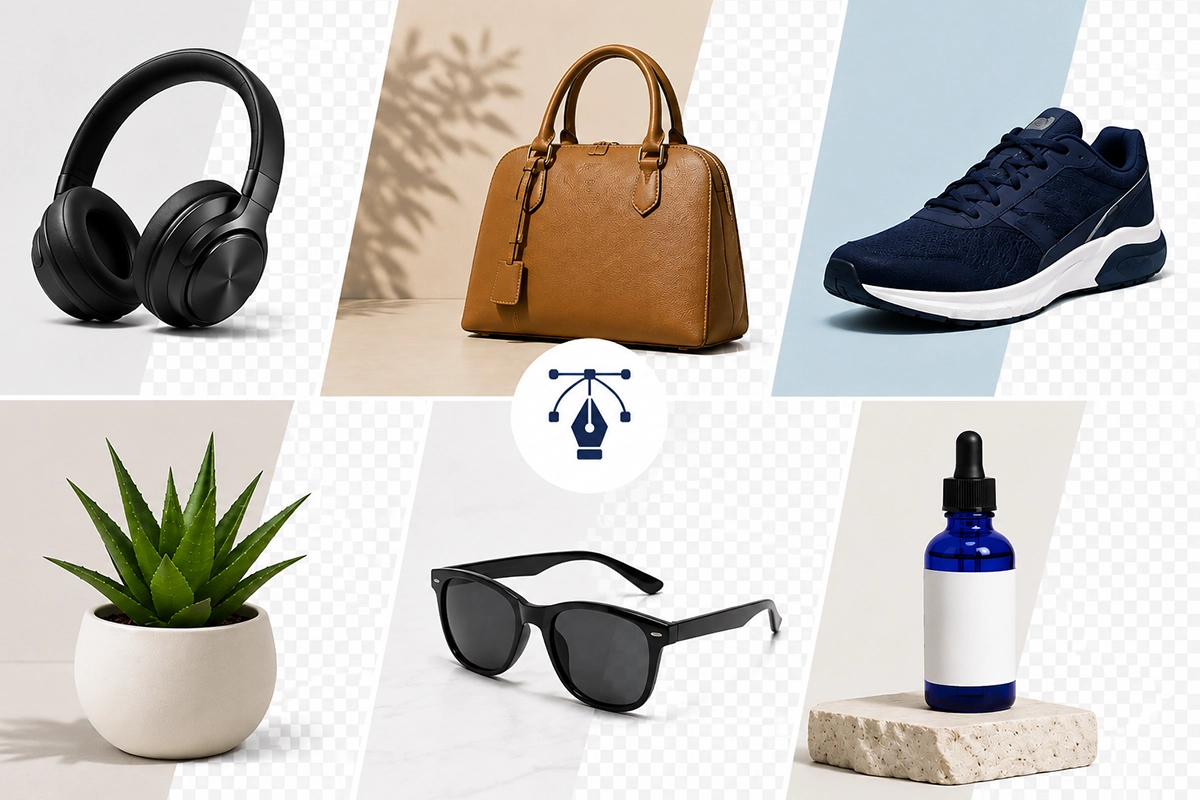
A Clipping path is a hand made vector path that is used to separate an image object from its background. It is generally created in Adobe Photoshop using the Pen Tool; therefore, they are normally used on product photography for any project where a clean cut-out would be necessary.
Major Categories of Clipping Path Technique
There are seven primary types of clipping path techniques which are discussed below:
1) Single Layer Clipping Path (basic form of Clipping Path)
This is one of the most often used types of clipping paths, and is mainly used with simple products.
Best suited for:
a) Books
b) Mobile devices
c) Boxes
d) Plates
e) Bottles
How it works: This involves drawing a single path around the object to erase/remove or replace the background.
Benefit of Simple Clipping:
It is Simple, Quick, cost-effective, and well-suited for large quantities of e-commerce image editing. Oftentimes, this method works well with Products that have clean edges.
2. Multi-Layer Clipping Path
The multi-layer Clipping Path method uses multiple clipping paths in a single image, so you can edit different portions of your image at different times.
Best suited for:
a) Clothing Products
b) Shoes
c) Items that come in various colors or materials.
Example: Each part of a shirt (sleeves, collars and buttons) can be edited or corrected for color separately.
Benefits:
- Better editing control
- Easier color adjustments
- The ability to be more flexible in retouching.
- It's a technique that is often employed in fashion and catalog shoots.
3. Complex Clipping Path
Products with many curves, holes, or detailed edges are clipped using complex clipping paths.
Best Suited for:
a) Jewelry
b) Furniture
c) Bicycles
d) Grouped products
Challenges:
These images typically take longer time and require more precision as the editor may need to have a lot of anchor points.
Result:
The final cutout is much cleaner and more accurate particularly for high-end product displays.
4. Super Complex Clipping Path
If the image has very detailed parts, the editors use very complex clipping paths.
Best Suited for:
a) Chains
b) Necklaces
c) Fur edges
d) Group photos
e) Overlapping subjects
Why it’s difficult:
This kind of editing requires patience and attention to detail, as the smallest of details must remain natural.
5. Multiple Clipping Path for Color Correction
This method is employed when different color corrections are desired in different areas of the same image.
Best Suited for:
a) Fashion products
b) Catalog photos
c) The garment color variations
Example: An editor can change the shirt's color while doing no alteration for the models face and the background remain unchanged.
6. Clipping Path & Image Masking
Clipping paths alone may not capture soft &/or fine edges, when these areas require extra detail, the masking method is implemented jointly.
Best fit:
a. Hair
b. Fur
c. Smoke
d. Clear items
How it works: The masking retains very fine detail that could not be captured with a normal clipping path.
Why do professionals need masking: This allows the item to be cut out but still retain maximum level of realism in relation to the original image.
7. The Compound Clipping Path
If there is an area on an object that has both inner transparent parts as well as outer opaque parts, then compound clipping path is used.
Best FIT:
a) Dressing table
b) Glasses
c) Frames
d) Coffee mugs
Example: The inside handle area of a mug should remain clear, but the rest of the mug should be selected. This technique is useful to keep transparency inside objects correct.
Choosing the Right Clipping Path Technique
It is important to select the right clipping path technique. Advanced editing isn't necessary for all images. The correct technique will vary based on:
a) Product complexity
b) Edge details
c) Background type
d) Editing purpose
Quick guideline:
Basic clipping path → Simple products
Complex clipping path → Detailed products
Clipping path + masking → Hair or fur
Using the right technique will help you to produce cleaner and more professional looking images.
Clipping Path in the USA eCommerce Industry
The quality of clipping path for eCommerce product image is vital , specifically in the United States. On sites like Amazon and Walmart, this means what they are expected to have:
a) A white background
b) A crisp edge
c) The product can be clearly discerned
d) Realistic colours
High quality stock images can help establish trust between consumers and businesses, increasing the level of consumer engagement.
Mistakes to Avoid When Creating Product Images
a) Over-anchoring or multiple anchor points when creating product images.
b) Leaving out realistic shadows.
c) Using clipping paths to cut out hair versus genuine hair trimming.
d) Using too many different zoom levels and ways to edit your product images.
It's important to always edit your photographs as per the industry standard, as small errors in clipping path could have a negative impact on the final quality of your image.
Final Thoughts
Not all product images are created equally; therefore not all will need the same clipping-path technique. A comparative analysis of different types of clipping paths can help you to choose the right one. The objects of commercial photographs can be cut out in a variety of ways, i.e. simply cut out or clipped out by masking, with masking being the more advanced way.
This means that by learning which methods are available for product clipping path editing, businesses and image editors will know which method to utilize for different types of product images. Clipping path editing is a significant part of creating beautiful and well-defined product images regardless if completed by someone or by you or using an outside company.

Asha is working as a Creative Director at Clipping Mask Asia. She has completed her Graduation from the University of Dhaka inFilm and Television Studies. She has vast knowledge in Photography, Videography, Video Editing, 3D Modeling, Rendering and Animation. She loves to explore the creative world with her academic knowledge, experience and creative mind. She writes creative blogs on design, illustration and editing for renowned brands like Clipping Mask Asia.